
Written Exam
Levels of Coaching Quality
The Role of a Coach in Leadership
Building Presence for Impactful Conversations
Understanding the Brain in Coaching
Pre Reading
FOUNDATION OF COACHING
Coaching is often misunderstood as giving advice, sharing experience, or directing someone toward a solution. In reality, coaching is something very different—and much deeper.
At its core, coaching is a structured and reflective conversation that helps individuals or teams gain clarity, expand their perspective, and take meaningful action toward goals that truly matter. More than just a conversation, coaching is a process of guiding change from within. It is about creating shifts that start from internal awareness, not external pressure.
This idea is reflected in how global institutions define coaching. The International Coaching Federation (ICF) describes coaching as a partnership in a thought-provoking and creative process that inspires individuals to maximize their personal and professional potential. Similarly, the European Mentoring and Coaching Council (EMCC) defines coaching as a developmental process through structured and reflective dialogue that enhances awareness, responsibility, and performance.
What these definitions highlight is simple but powerful: coaching is not about telling people what to do. It is about helping people think in a way that allows them to discover their own answers. Coaching works at a deeper level—shaping awareness, strengthening intention, and influencing how individuals see themselves and their possibilities.
To understand why coaching is so powerful, it helps to look at how change actually happens.
Human development typically unfolds through a series of stages. It begins with knowing what needs to change, followed by understanding why it matters. From there, a person becomes aware of the need to act, builds the intention to change, begins to act, and eventually reaches the stage of becoming, where the change becomes part of their identity.
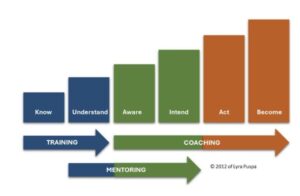
Most learning interventions only reach the early stages. Training focuses on knowledge and understanding. Mentoring often helps deepen understanding and raise awareness through guidance and shared experience. While both are valuable, they tend to create change from the outside in.
Coaching, however, plays a different role. It supports individuals in moving beyond awareness into intention, action, and ultimately identity. It helps people not only understand change, but live it—until it becomes part of who they are.
This is why coaching is essential for sustainable transformation. Real change does not happen when someone simply knows what to do. It happens when they begin to see differently, choose differently, and act consistently in alignment with that new awareness.
In this sense, coaching is not just about achieving goals. It is about enabling growth at a deeper level—where behavior, mindset, and identity evolve together.
As we will explore further, advances in neuroscience are now helping us understand this process even more clearly. They reveal how each stage of change is connected to how the brain works, opening new possibilities for making coaching not only impactful, but also measurable and sustainable.
BRAIN-FOCUSED COACHING
In recent years, terms like neurocoaching, brain-based coaching, or neuroscience-informed coaching have become increasingly popular. Most of these approaches introduce useful insights about how the brain works, then apply that understanding into existing coaching models. While this adds valuable perspective, in many cases the coaching frameworks themselves have not been directly tested using neurotechnology to see whether they truly activate the intended brain systems.
This is where Brain-Focused Coaching (BFC) takes a different path. BFC is not just about understanding the brain—it is about observing and measuring what actually happens in the brain during coaching. Developed by Lyra Puspa through research at Vanaya NeuroLab, this approach uses neurotechnology to map how coaching impacts brain activity and the human nervous system in real time. Instead of relying solely on perception or feedback, coaching is examined through measurable physiological responses.
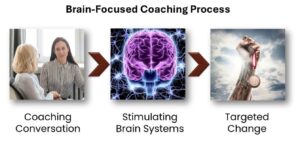
From this perspective, coaching is no longer seen as just a meaningful conversation. It becomes a structured intervention that is intentionally designed to influence how the brain works. Each coaching process is crafted to activate, optimize, or shift specific mental and emotional processes—such as how individuals make decisions, regulate emotions, build habits, and move toward action. At its core, BFC recognizes that every behavior, choice, and transformation is rooted in the way the brain operates.
What makes this approach particularly powerful is its ability to move from theory into measurable impact. Rather than simply asking whether a session feels useful, BFC allows us to explore what has actually changed beneath the surface. By using tools such as qEEG to track brain activity, HRV to understand emotional regulation, and microexpression analysis to capture subtle emotional responses, coaching can be evaluated in a more objective and precise way. This enables a clearer understanding of whether the coaching process is activating the right systems to support the desired change.
This also shifts how we think about coaching quality. Traditional certification standards play an important role in ensuring that a coach demonstrates the right competencies—such as presence, questioning skills, and ethical behavior. However, competence alone does not always answer a deeper question: what truly changes within the coachee? Sustainable transformation is not only about having a good conversation, but about whether that interaction can influence perception, reshape habits, strengthen motivation, and improve selfregulation at a deeper, often invisible level.
Interestingly, even though Brain-Focused Coaching is grounded in neuroscience, it does not make coaching more complicated. In fact, it often makes the process more structured, intentional, and easier to learn. The models and techniques are designed to be brain-friendly, helping coaches and learners integrate knowledge into long-term memory rather than just temporary understanding. This allows the learning to stick—and more importantly, to be applied consistently in real situations.
In today’s world, where individuals and organizations are navigating constant change and increasing complexity, this matters more than ever. Many transformations fail not because of lack of intention, but because the approach does not reach the level where real change happens. A scientifically grounded approach provides a stronger foundation—one that is not only insightful, but also reliable and measurable.
Brain-Focused Coaching represents a shift in how we understand coaching itself. It moves from coaching as a conversation into coaching as an evidence-based intervention for transformation. Because lasting change does not happen only in what we say—it happens in how the brain adapts, rewires, and evolves over time.
Pre-Reading Coaching
FOUNDATION OF COACHING
Coaching is often misunderstood as giving advice, sharing experience, or directing someone toward a solution. In reality, coaching is something very different—and much deeper.
At its core, coaching is a structured and reflective conversation that helps individuals or teams gain clarity, expand their perspective, and take meaningful action toward goals that truly matter. More than just a conversation, coaching is a process of guiding change from within. It is about creating shifts that start from internal awareness, not external pressure.
This idea is reflected in how global institutions define coaching. The International Coaching Federation (ICF) describes coaching as a partnership in a thought-provoking and creative process that inspires individuals to maximize their personal and professional potential. Similarly, the European Mentoring and Coaching Council (EMCC) defines coaching as a developmental process through structured and reflective dialogue that enhances awareness, responsibility, and performance.
What these definitions highlight is simple but powerful: coaching is not about telling people what to do. It is about helping people think in a way that allows them to discover their own answers. Coaching works at a deeper level—shaping awareness, strengthening intention, and influencing how individuals see themselves and their possibilities.
To understand why coaching is so powerful, it helps to look at how change actually happens.
Human development typically unfolds through a series of stages. It begins with knowing what needs to change, followed by understanding why it matters. From there, a person becomes aware of the need to act, builds the intention to change, begins to act, and eventually reaches the stage of becoming, where the change becomes part of their identity.
Most learning interventions only reach the early stages. Training focuses on knowledge and understanding. Mentoring often helps deepen understanding and raise awareness through guidance and shared experience. While both are valuable, they tend to create change from the outside in.
Coaching, however, plays a different role. It supports individuals in moving beyond awareness into intention, action, and ultimately identity. It helps people not only understand change, but live it—until it becomes part of who they are.
This is why coaching is essential for sustainable transformation. Real change does not happen when someone simply knows what to do. It happens when they begin to see differently, choose differently, and act consistently in alignment with that new awareness.
In this sense, coaching is not just about achieving goals. It is about enabling growth at a deeper level—where behavior, mindset, and identity evolve together.
As we will explore further, advances in neuroscience are now helping us understand this process even more clearly. They reveal how each stage of change is connected to how the brain works, opening new possibilities for making coaching not only impactful, but also measurable and sustainable.
BRAIN-FOCUSED COACHING
In recent years, terms like neurocoaching, brain-based coaching, or neuroscience-informed coaching have become increasingly popular. Most of these approaches introduce useful insights about how the brain works, then apply that understanding into existing coaching models. While this adds valuable perspective, in many cases the coaching frameworks themselves have not been directly tested using neurotechnology to see whether they truly activate the intended brain systems.
This is where Brain-Focused Coaching (BFC) takes a different path. BFC is not just about understanding the brain—it is about observing and measuring what actually happens in the brain during coaching. Developed by Lyra Puspa through research at Vanaya NeuroLab, this approach uses neurotechnology to map how coaching impacts brain activity and the human nervous system in real time. Instead of relying solely on perception or feedback, coaching is examined through measurable physiological responses.
From this perspective, coaching is no longer seen as just a meaningful conversation. It becomes a structured intervention that is intentionally designed to influence how the brain works. Each coaching process is crafted to activate, optimize, or shift specific mental and emotional processes—such as how individuals make decisions, regulate emotions, build habits, and move toward action. At its core, BFC recognizes that every behavior, choice, and transformation is rooted in the way the brain operates.
What makes this approach particularly powerful is its ability to move from theory into measurable impact. Rather than simply asking whether a session feels useful, BFC allows us to explore what has actually changed beneath the surface. By using tools such as qEEG to track brain activity, HRV to understand emotional regulation, and microexpression analysis to capture subtle emotional responses, coaching can be evaluated in a more objective and precise way. This enables a clearer understanding of whether the coaching process is activating the right systems to support the desired change.
This also shifts how we think about coaching quality. Traditional certification standards play an important role in ensuring that a coach demonstrates the right competencies—such as presence, questioning skills, and ethical behavior. However, competence alone does not always answer a deeper question: what truly changes within the coachee? Sustainable transformation is not only about having a good conversation, but about whether that interaction can influence perception, reshape habits, strengthen motivation, and improve selfregulation at a deeper, often invisible level.
Interestingly, even though Brain-Focused Coaching is grounded in neuroscience, it does not make coaching more complicated. In fact, it often makes the process more structured, intentional, and easier to learn. The models and techniques are designed to be brain-friendly, helping coaches and learners integrate knowledge into long-term memory rather than just temporary understanding. This allows the learning to stick—and more importantly, to be applied consistently in real situations.
In today’s world, where individuals and organizations are navigating constant change and increasing complexity, this matters more than ever. Many transformations fail not because of lack of intention, but because the approach does not reach the level where real change happens. A scientifically grounded approach provides a stronger foundation—one that is not only insightful, but also reliable and measurable.
Brain-Focused Coaching represents a shift in how we understand coaching itself. It moves from coaching as a conversation into coaching as an evidence-based intervention for transformation. Because lasting change does not happen only in what we say—it happens in how the brain adapts, rewires, and evolves over time.